Along with tracking transaction volumes, we pay close attention to the Acceptance Rate. Many of you probably do the same. In our industry, AR is a key metric for payment performance. But if we only look at backend success, we miss the main place where users drop off: when they interact with the payment widget.
Over the past year, our team partnered with a client to make crypto payments a normal part of their process. We also reviewed payment flows across various methods and currencies. With so many options, it was a complex challenge. That’s why we naturally aimed to unify and simplify these payment flows, and somehow standardise them.
However, trying to simplify and generalise in such a diverse payment landscape doesn’t work well. It often results in a lower AR or causes many users to leave right before the key moment — submitting their payment.
In 2025, we set out to build a multi-currency payment widget that would let the client's users easily choose their preferred currency and payment method, whether fiat or crypto. By December, we launched the redesigned widget. Our main goal wasn’t just to add features, but to solve a specific problem we found in the data: users losing their intent.
The Research
During our research, we noticed that many users who planned to complete a transaction dropped off before even trying to pay. When we analysed user behaviour, we saw a clear pattern of users restarting the process.
If a user wanted to switch from their local fiat currency to a stablecoin or use a different network, the client's old flow often made them leave the widget, change platform settings, and then return. It’s a simple switch, but it happened on the platform, not in the payment widget. In payments, every time a user has to go back a step, the chance they will finish the transaction drops significantly. We realised that making users handle their own context switching was breaking their original intent.
Designing
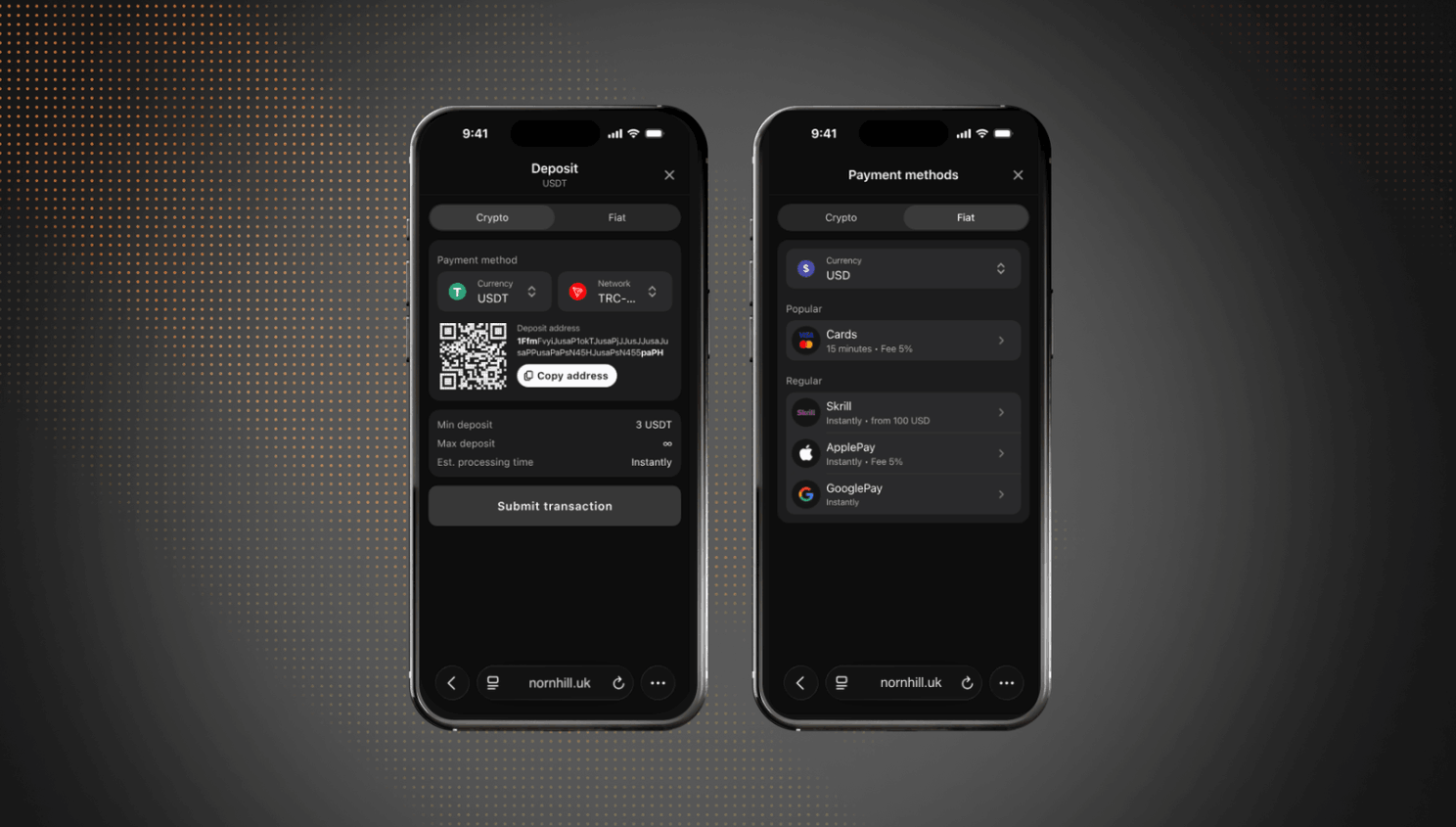
To help users move smoothly, our team built the new widget around three main principles:
- First, we ensured the system remembered what the user chose last time. If someone used a certain currency before, the widget now opens with that already selected. Preserving context.
- Second, in-widget switching lets users change currencies and payment methods without reloading the page. This way, they can explore options without feeling like they’ve left the transaction.
- Third, we focused on curation over choice. We prioritised a few stable, familiar options instead of showing every possible asset. This helps avoid decision paralysis, which often leads users to close the widget.
The Analysis
We often say "we are data-driven", but in reality, we might use only about 10% of the data we collect. Even so, that small part helps us stop guessing. This matches a point often discussed in the McKinsey Podcast:
Sustained growth comes not from one perfect strategy, but from careful execution and making the most of the data you have.
We appreciate this honesty because it matches what we experience in our work. It is tough to know which project will make the biggest difference, so we focus on the overall results of what we do together with our clients.
Since launch, we’ve tracked these changes with detailed funnel reports. We don’t just look at the final "Success" screen, but also watch the small steps users take inside the widget.
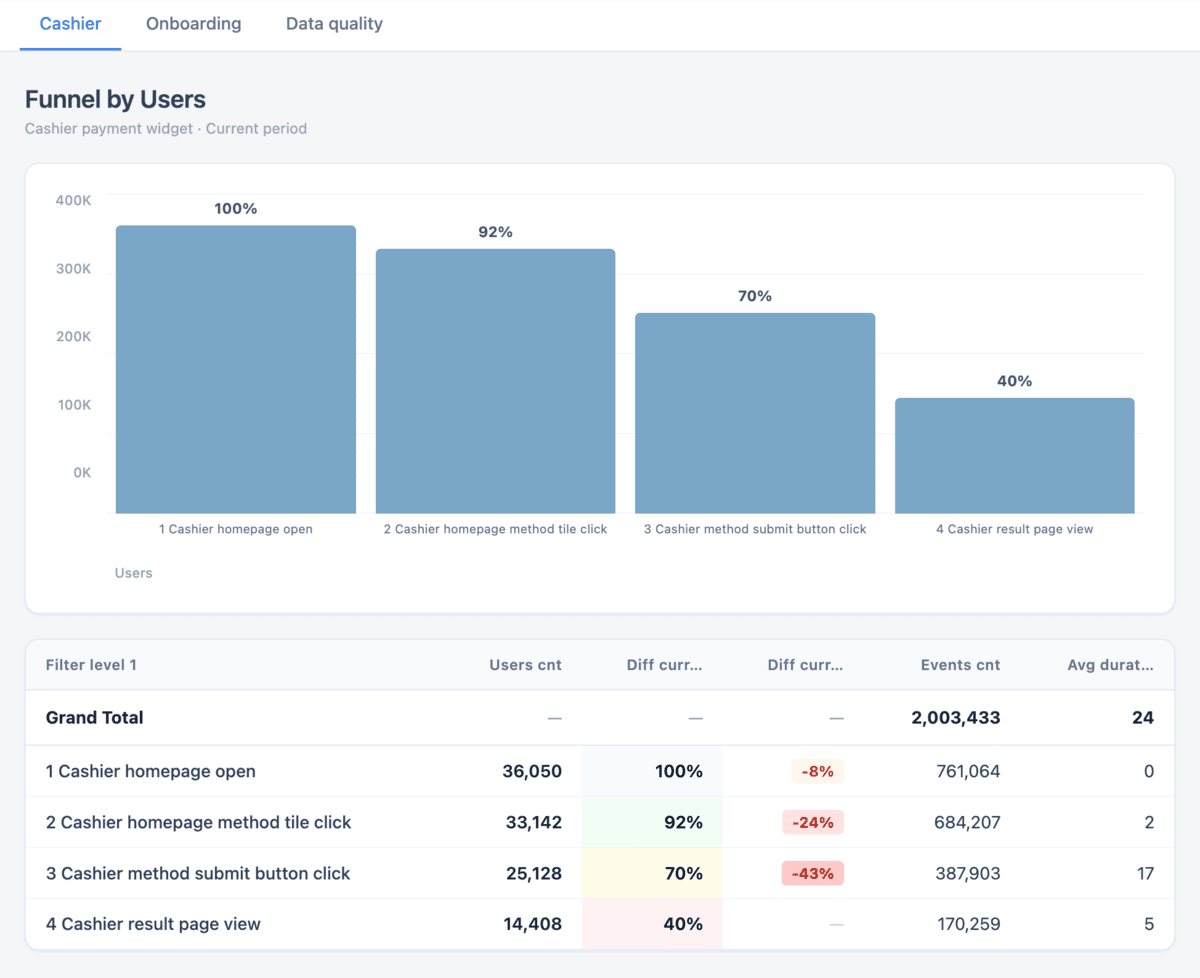
This is an example of tracking user interactions across different levels of friction, depending on the currency used. The screenshot displays a filtered card payment flow, and there are a couple of such funnels to track. We are now using these insights to plan the next phase, to polish the path from the first click to final confirmation, and enhance in-widget switching. Subsequently, we will develop a third phase to introduce new options such as onramp and Wallet Connect.
A Final Thought for Product Teams
As consultants in payments or B2B, it is easy to focus on major client improvements. However, the end user experience and mindset are equally important as technical considerations. Every B2B customer has their own end users to retain.
- Leverage your data to identify where users need to backtrack.
- Don’t feel you have to reinvent the wheel. Look at how high-volume platforms handle complex choices in simple ways and adopt proven patterns, unless you’re trying something disruptive or experimental.
- We rolled this out in stages, using funnel data to test our ideas before each phase. So keep iterating based on your data.
Enhancing user flow and preserving user intent can often generate greater revenue gains than solely optimising the gateway’s acceptance rate.